
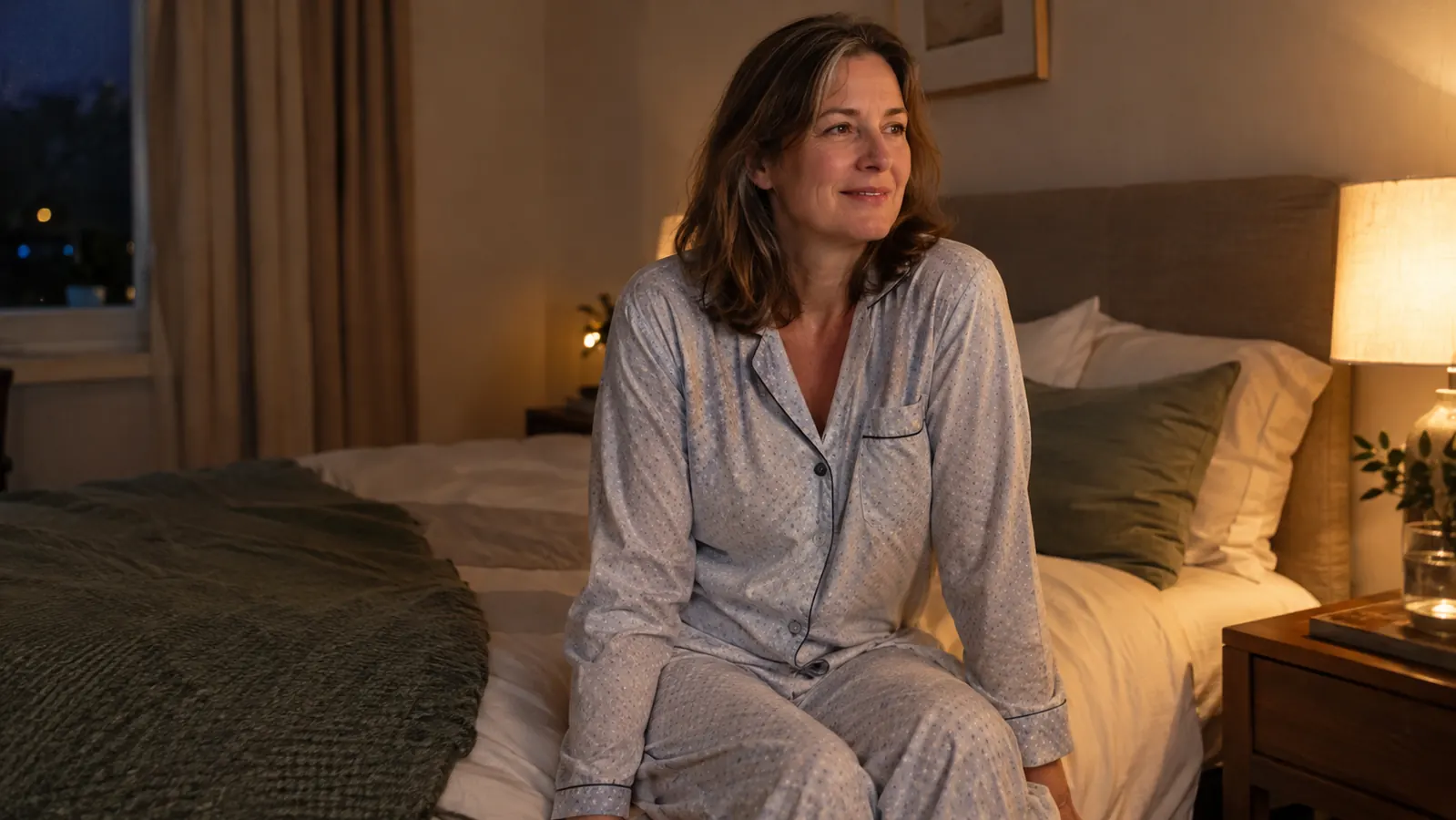
I used to treat 3 a.m. like a scheduled event. The heat would roll up my neck, the sheets would feel damp, and I would lie there doing the math on how many hours of sleep I could still get before the alarm. My doctor and I have talked about the night sweats, and she has been clear that what I wear and how I set up the bedroom will not stop them. But she also said comfort matters, and that is where I have spent the last four months testing things in my own room. The single biggest change was a pair of Joyaria cooling pajamas, and the steps around them are what finally made the difference between waking up soaked and waking up dry.
This is not a medical plan and it is not a promise that any product will fix hot flashes. It is a five-step routine I actually use, in the order I use it, with the honest parts left in. If you wake up hot and wide awake at 3 a.m., this is the setup that helped me.
Start With the Layer That Touches Your Skin
The Joyaria cooling pajama set is the first thing I reach for on hot nights. Bamboo viscose, long sleeves, a button front, and pants that do not bind. It is the layer that made the rest of my routine work.
Amazon Check Today's Price on Amazon →Step 1: Put On Pajamas That Breathe, Not Ones That Trap Heat
For years I slept in old cotton T-shirts, because that is what I had. Cotton holds moisture against your skin, and once I woke up damp, the T-shirt stayed damp and I stayed awake. Before the Joyaria set, I also tried a synthetic moisture wicking nightshirt from a big box store, and that was its own lesson. The shirt felt dry when I put it on, but by 2 a.m. it was clammy against my skin and somehow cold at the same time. I wore it twice and gave up. The Joyaria set is bamboo viscose, and the difference showed up the first night. The fabric feels cool when you put it on, and when I did wake up warm, the material did not cling or stay wet the way cotton did. That first week, I kept waking up and checking the fabric out of pure disbelief.
I own one set in navy, long sleeve with a button front and pants. I was skeptical about long sleeves in summer, but the fabric is light enough that it does not add heat. The button front matters more than I expected, because on the nights when I need to cool off fast, I can open the top instead of wrestling out of a pullover. The first night I wore it was early June, and I remember checking the clock when I woke up warm around 2:15. My neck was damp but my chest was dry, and the fabric did not stick to me. I opened the top two buttons, turned the fan up one notch, and went back to sleep. That had never happened in cotton, where I would have been up for an hour trying to cool off.
A few honest notes. The set runs true to size for me, and it washes well on the gentle cycle in cool water. I have washed it every week since early June, and it still feels the same as it did that first night, no pilling and no stretched-out cuffs. I hang it to dry on a hanger most weeks because the dryer is hard on bamboo viscose. It is not a medical device and it will not stop a hot flash. What it does is dry quickly and stay comfortable, which means when I do wake up warm, I am not lying in a wet shirt trying to fall back asleep. That alone made my worst nights feel shorter and less miserable, for me.
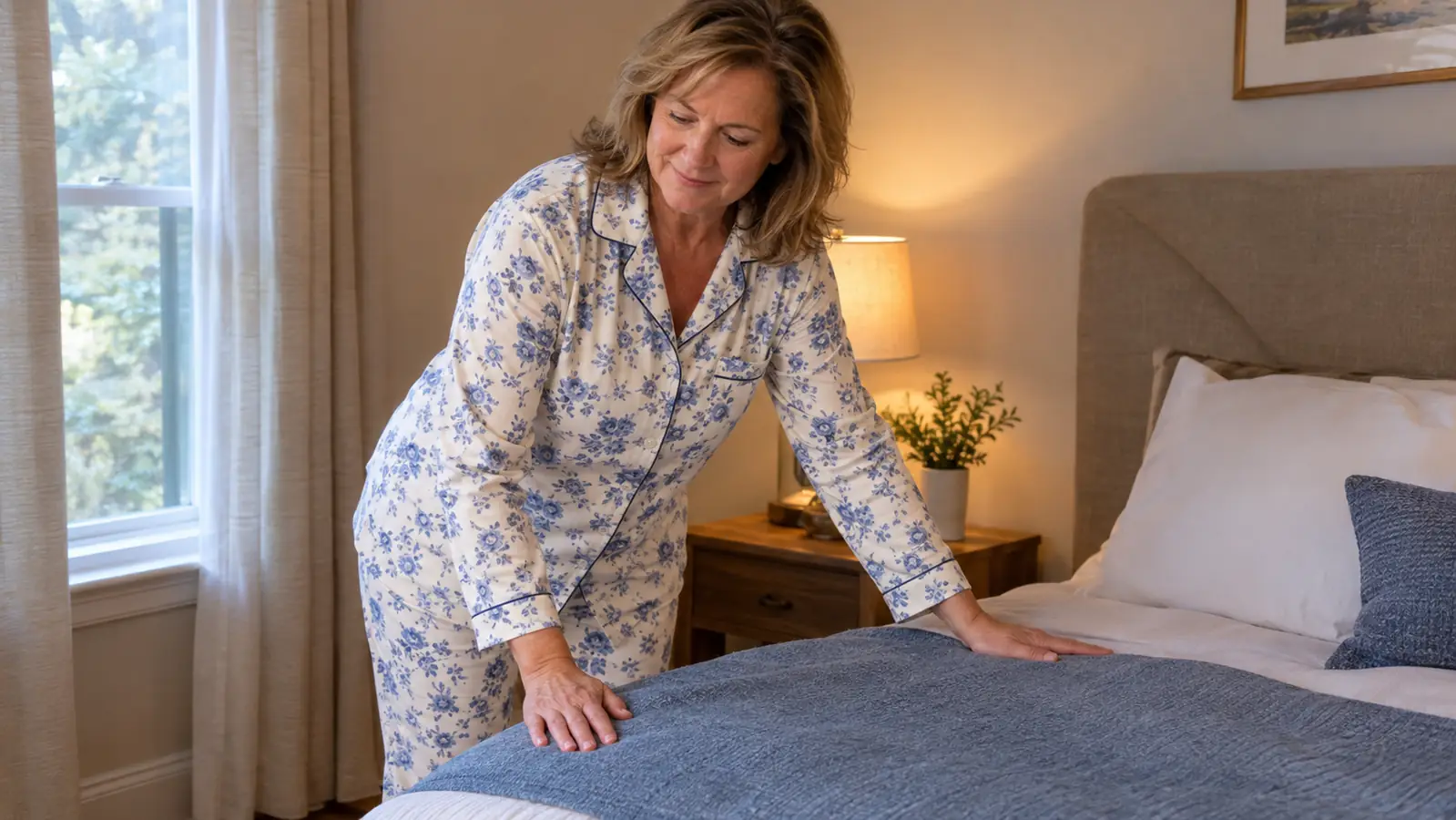
Step 2: Change the Sheets, Not Just the Pajamas
Pajamas are only half the equation. I swapped our old cotton sheets for Bedsure PureWoven sheets, which are rayon derived from bamboo, in a light gray. They feel smooth and cool, and they do not trap the heat the way my old sheets did. I cannot give you a thread count because I do not know it, and I will not pretend I measured a temperature change. What I can tell you is that the bed feels less stuffy when I get in. Under the fitted sheet we also put a Linenspa 2 inch gel memory foam topper on our existing mattress. I added it in mid-June because our old mattress had gone soft and held heat, and it made the bed more comfortable without making it sleep hot. I know a foam topper sounds backwards for a hot sleeper, but the topper is not what does the cooling. The bamboo sheets are the layer that keeps the surface from holding heat, and the two work together.
The fitted sheet stays put, which matters when you are tossing at 3 a.m. and do not want to remake the bed in the dark. The set came with the fitted sheet, a flat sheet, and two pillowcases, and all four pieces have held up through four months of weekly washing. I wash them in cool water and they come out without wrinkles that bother me. One night in mid-July, after a day when the house hit 86, I got into bed expecting the worst and the sheets still felt smooth and dry. On wash day they go back on the bed the same afternoon. If you are not ready to replace your sheets, at least switch to a lighter blanket and keep the heavy one at the foot of the bed for your partner. Dennis still sleeps under his heavier blanket, and the compromise is that my side gets the lighter cover and the fan.
Step 3: Give Your Head and Neck Somewhere Cool to Go
My neck and the back of my head are where I notice the heat first. Dennis and I both use a QUTOOL cooling pillow, which is shredded memory foam with a zipper so you can adjust the fill. I took some of the foam out of mine because I like a lower pillow, and he left his fuller. The set came as two pillows, so we each got one, and the foam is CertiPUR-US certified, which mattered to me because I did not want to sleep on something with a chemical smell. It is not a gel pillow and it does not have ice packs in it, but the shredded foam does not hold heat the way my old solid pillow did. My old pillow felt warm to the touch by midnight in summer, and this one does not. It took me about a week to dial in the fill, and now I barely think about it, which is exactly what I wanted from a pillow.
The zipper is the part I did not expect to love. Being able to adjust the loft means I can change it depending on how I am sleeping that week. I took out about two cups of fill the first evening, slept on it for two nights, and took out a little more before I got the height right. Dennis took nearly a third of the fill out of his because he likes a flat pillow, which tells you there is no single right answer. The pillowcase from the Bedsure set fits over it fine, and the combination stays cooler than what I had before. The first night after I adjusted the fill, I woke up once around 3:30 and my pillow did not feel like it had stored the heat from my head. That was the night I stopped blaming my pillow and started fixing it. I flip the pillow a couple of times a week so the fill settles evenly, and that takes ten seconds.
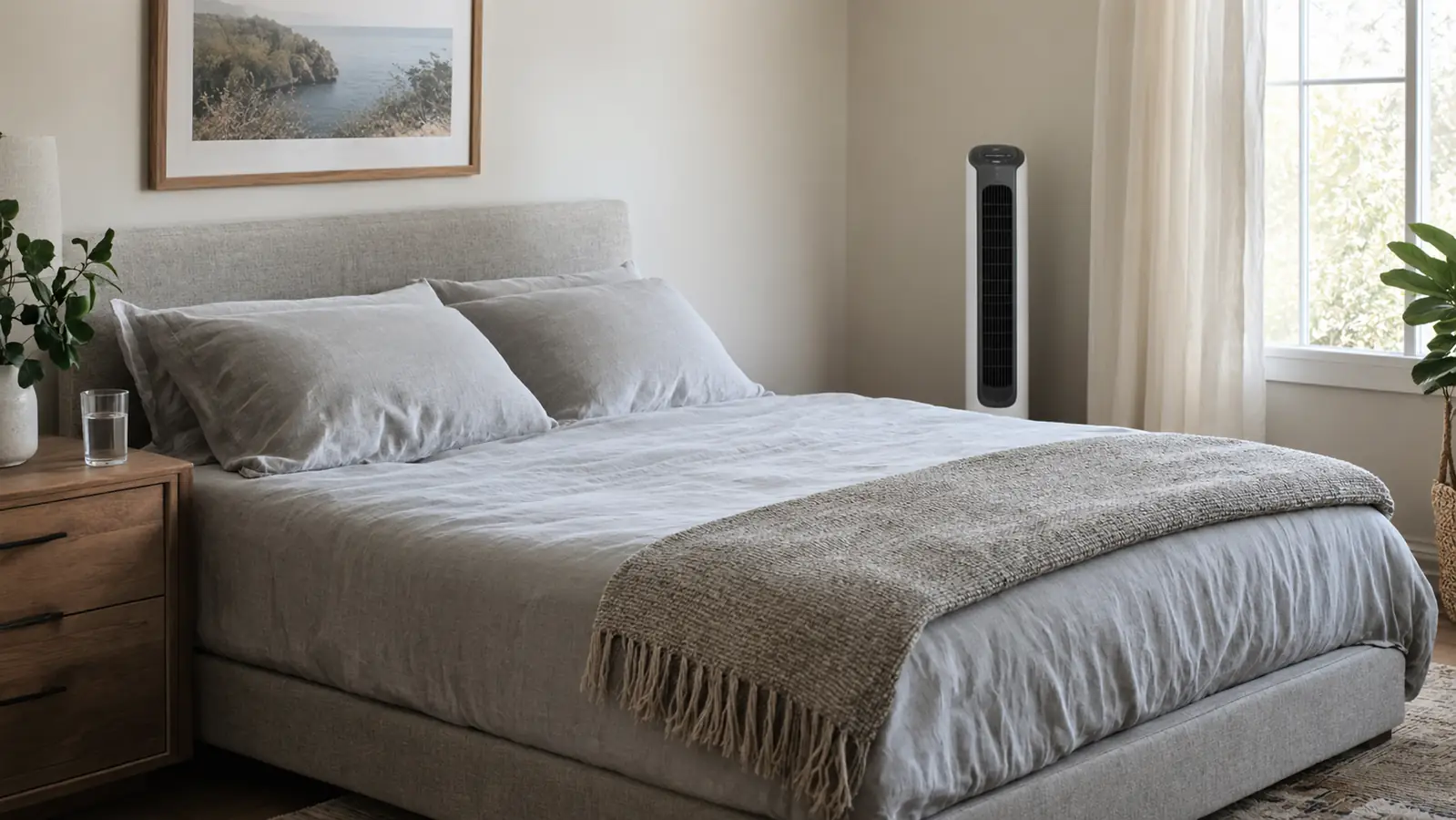
Step 4: Cool the Air Around You, Not the Whole House
Our thermostat stays around 68 at night, but the bedroom faces west and holds the afternoon heat. On a normal summer day the room is still warm at 10 p.m., and cranking the whole house colder is wasteful. So I use a Dreo tower fan on my side of the bed. It has eight speeds, oscillates, and comes with a remote, which means I can adjust it without sitting up. The fan is rated at 28 feet per second of air velocity, which I looked up because I wanted to know what I was buying, and on low it is quiet enough that Dennis does not complain. I keep it on a low speed most nights, just enough to keep the air moving, and I point it at my side of the bed.
I will not quote you a decibel level or claim it dropped the room temperature by a specific number of degrees, because I did not measure that. What I can tell you is that the moving air makes the difference between feeling trapped in the heat and feeling like I can breathe. One night in late July, after a day that hit 89, I ran the fan on medium with the oscillation on and slept until 5 a.m., which had not happened in weeks. Dennis runs cold and likes a heavy blanket, so the fan is pointed at my side and the blanket situation is negotiated nightly. He gets the heavier cover, I get the moving air, and we both get to sleep.
The remote lives on my nightstand, and I use it more than I expected. When I wake up warm, I can nudge the speed up without sitting up or fumbling for a switch in the dark. In the winter I put the fan away entirely, but from late spring through early fall it stays on my side of the bed. If you only change one thing about your sleep environment and you do not want to spend much, a fan is the cheapest start. A fan will not stop a hot flash, but it will move the air off your skin, and that alone can be the difference between drifting back off and lying there wide awake.
Step 5: Keep a Cool Cloth and Cold Water by the Bed
This is the cheapest step and honestly one of the most useful. I keep a glass of cold water on my nightstand and a small damp cloth in a bowl. When I wake up hot, I press the cloth to the back of my neck for a minute, take a sip of water, and lie back down. It sounds too simple to matter, but it interrupts the spiral of lying there getting hotter and more frustrated.
I also stopped reaching for my phone when I wake up hot. The light wakes me more, and the clock makes me do the math on how many hours are left. Now I just cool my neck, drink some water, and let the fan do its job. Some nights I am back asleep in a few minutes. Some nights I am not, but I am at least comfortable while I wait.
What Else Helps
A few smaller things rounded out my routine. I keep the bedroom dark and a little cool during the day by closing the curtains on the west window. I wash my pajamas and sheets in cool water with a gentle detergent, because fabric softener can leave a coating that traps heat. And I talked with my doctor about my symptoms, which is the most important step of all. No pajama or pillow replaces that conversation. If your night sweats are new, worse, or keeping you from functioning, please bring it up with your own doctor.
The night I stopped waking up in a wet T-shirt was the night I stopped dreading bedtime. The Joyaria set did not stop my hot flashes. It just meant I was not lying in a damp shirt afterward, and that changed everything.
A Cooler Night Starts With the Layer You Sleep In
If you are tired of waking up soaked and starting your day exhausted, the Joyaria cooling pajama set is the place to begin. It is the piece of my routine I would not skip.
Amazon Check Today's Price on Amazon →