
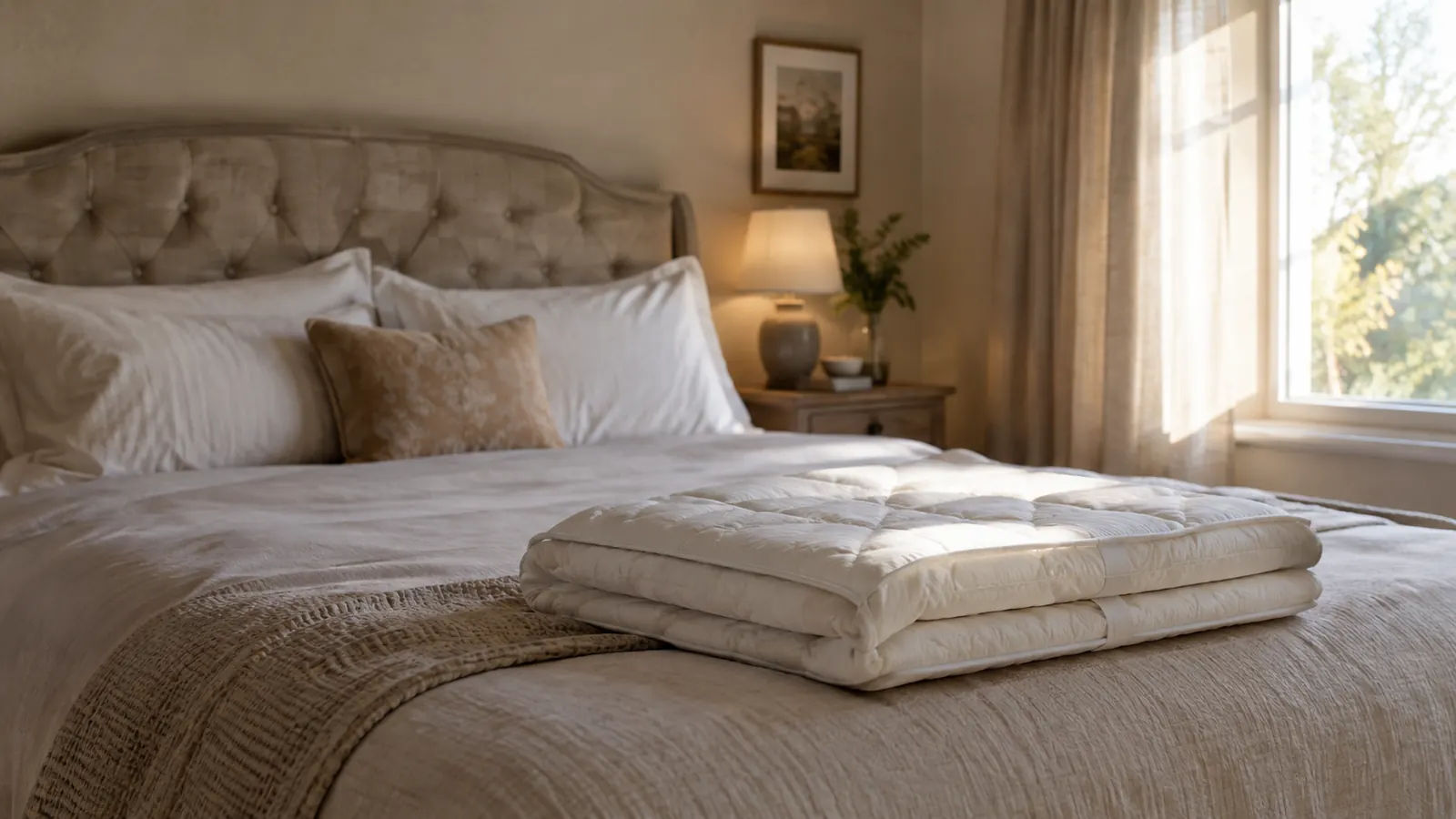
If you sleep on an older mattress that holds heat and you run hot at night, you already know the drill. You fall asleep fine, then somewhere around 2 or 3 a.m. you wake up with your neck damp and the sheet stuck to your back. You flip the pillow, kick a leg out from under the covers, and lie there wondering if you should just give up and go read in the living room. I have been there more nights than I can count. Memory foam hugs you, which is wonderful for pressure points and terrible for heat. The fix is not a new mattress. It is a layer of gel memory foam on top, plus a few small changes to the room and the bedding. I have spent about four months testing the Linenspa 2 inch gel memory foam topper in my own bedroom, and this is the step by step version of what actually helped.
A quick note before we start: I am a librarian, not a doctor. I have talked with my own doctor about my night sweats, and you should do the same if they are disrupting your sleep. Nothing in this guide is medical advice. What I can tell you is what worked for me, in my bedroom, on my queen bed, with a husband who likes a heavy blanket and a thermostat set around 68 at night.
Start With the Layer That Touches Your Back
The Linenspa 2 inch gel memory foam topper was one of the changes I made in June, and it made a real difference. It sits under your fitted sheet, so you do not feel it move or bunch while you sleep.
Amazon Check Today's Price on Amazon →Step 1: Unbox and Air Out the Topper
The Linenspa topper arrives rolled up tight in plastic wrap, the way most foam products do. Do not expect to unroll it and sleep on it the same night. It needs time to expand and to lose the new foam smell. I opened mine on a Saturday morning in mid-June, laid it flat on the bed, and let it sit with the windows open for most of the day. By evening it had puffed up to its full 2 inches and the smell was barely there. If you are sensitive to odors, give it a full 24 hours.
One thing I did not expect: the topper is easy to handle. It is still a real layer of foam, not a flimsy pad. Getting it onto the bed by myself took a little maneuvering, and I am glad I did it in the morning when I had energy. If you have limited mobility or a bad back, ask someone to help you lift it. This is not a product you can wrestle into place at 10 p.m. when you are already tired.
While the topper expands, take the plastic off and throw it away. Do not store the plastic under the bed. Foam needs air to off-gas, and the whole point of this step is to let the topper breathe before you sleep on it. I left the bedroom windows open and the ceiling fan on low that whole Saturday, and by supper time the room just smelled like a clean bedroom again. If you open the box and the topper looks smaller than you expected, do not panic. It expands over several hours, not all at once.
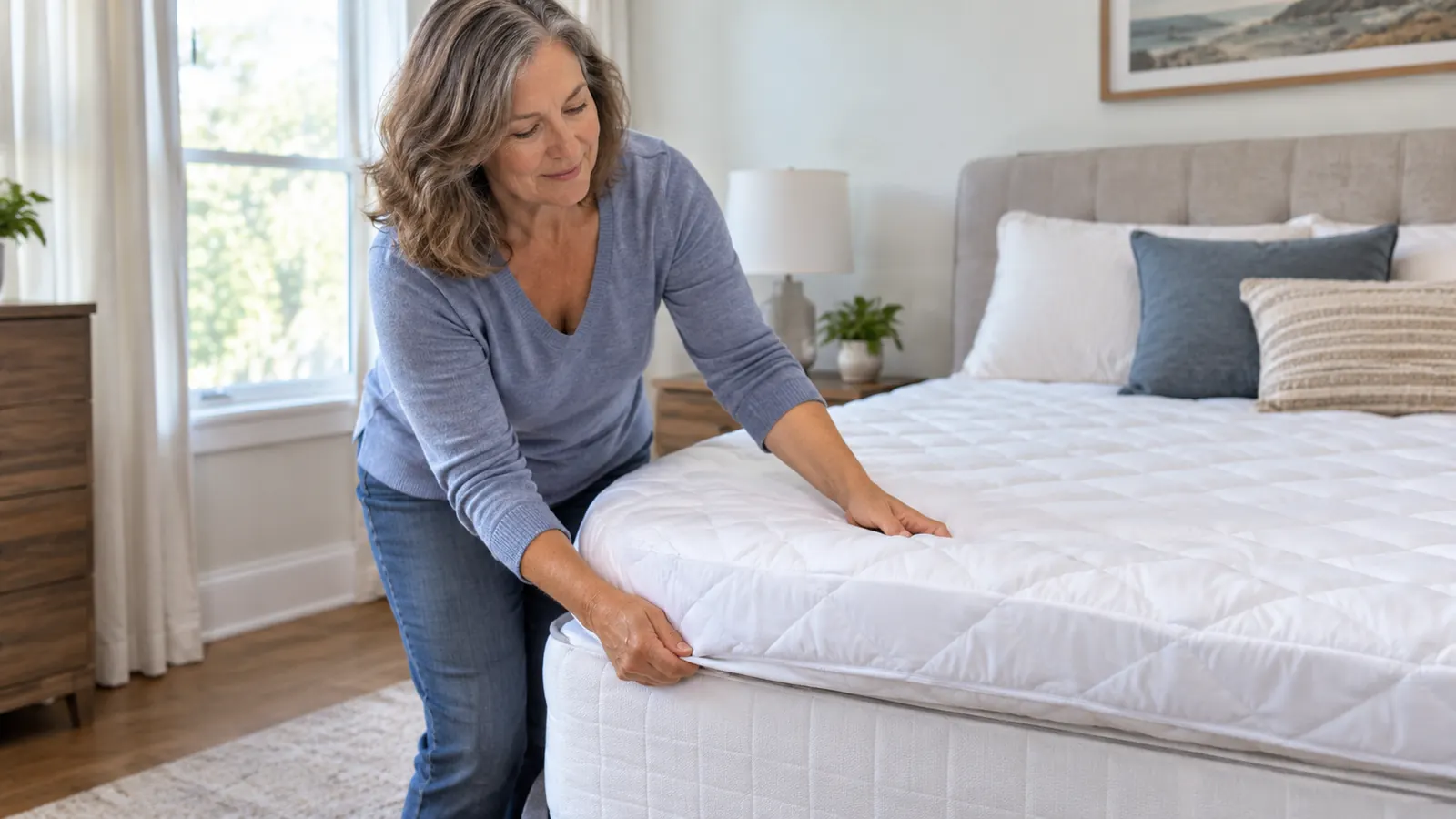
Step 2: Put the Topper Under the Fitted Sheet, Not Over It
This sounds obvious, but I have seen people put a topper on top of the fitted sheet, which means it slides around all night and bunches under their hips. The Linenspa topper goes directly on the mattress, then the fitted sheet goes over it. The sheet holds it in place, and you never feel the seam or the edge of the foam.
When you put the fitted sheet on, pull it snug and tuck the corners well. The topper adds a little height to the bed, so if your sheets have been borderline too small, this is the moment you find out. Our older shallow fitted sheet would not stretch over it, but the deeper Bedsure fitted sheet fits fine. If yours will not stay on the corners, a set of sheet straps is a cheap fix and worth having on hand. Dennis bought ours and installed them in about five minutes, and we have not had a corner pop off since.
Do not use a mattress pad on top of the topper unless the pad is very thin. Every extra layer between you and the gel foam is one more layer that can trap heat. The whole point of the topper is to sit close to you and pull heat away from your body. Let it do its job. I tried a quilted pad over it for two nights and woke up warmer both times, so the pad went back in the linen closet.
Step 3: Change the Sheets to Something Breathable
The topper does a lot, but it cannot do everything. If you are sleeping on polyester sheets, you are undoing half the benefit. I switched to a set of Bedsure PureWoven sheets made from rayon derived from bamboo, and the difference was immediate. They feel cool to the touch and they breathe in a way that synthetic sheets do not. I have them in light gray, and they have washed well for months. The sheets went on a week or two before the topper, and I would not want to go back to the old ones.
You do not need to spend a fortune on sheets. The key is the fiber. Look for cotton, linen, or bamboo rayon, and avoid anything that says polyester, microfiber, or sateen if you run hot. Percale cotton is another good option because it has a crisp, cool hand feel. The goal is a sheet that lets air move, not one that traps your body heat against the foam.
I also stopped using the heavy quilt in the summer. I know that sounds obvious, but the quilt was just another layer I would kick off at 3 a.m. and then tangle with. Now I sleep under the flat sheet and a light cotton blanket. Dennis still uses his heavy blanket, because he runs cold. We have learned to make the bed in layers so each of us can adjust. On the warmest nights in July, I even folded the cotton blanket down to my waist and slept with just the sheet over my legs.
Step 4: Add Air Movement on Your Side of the Bed
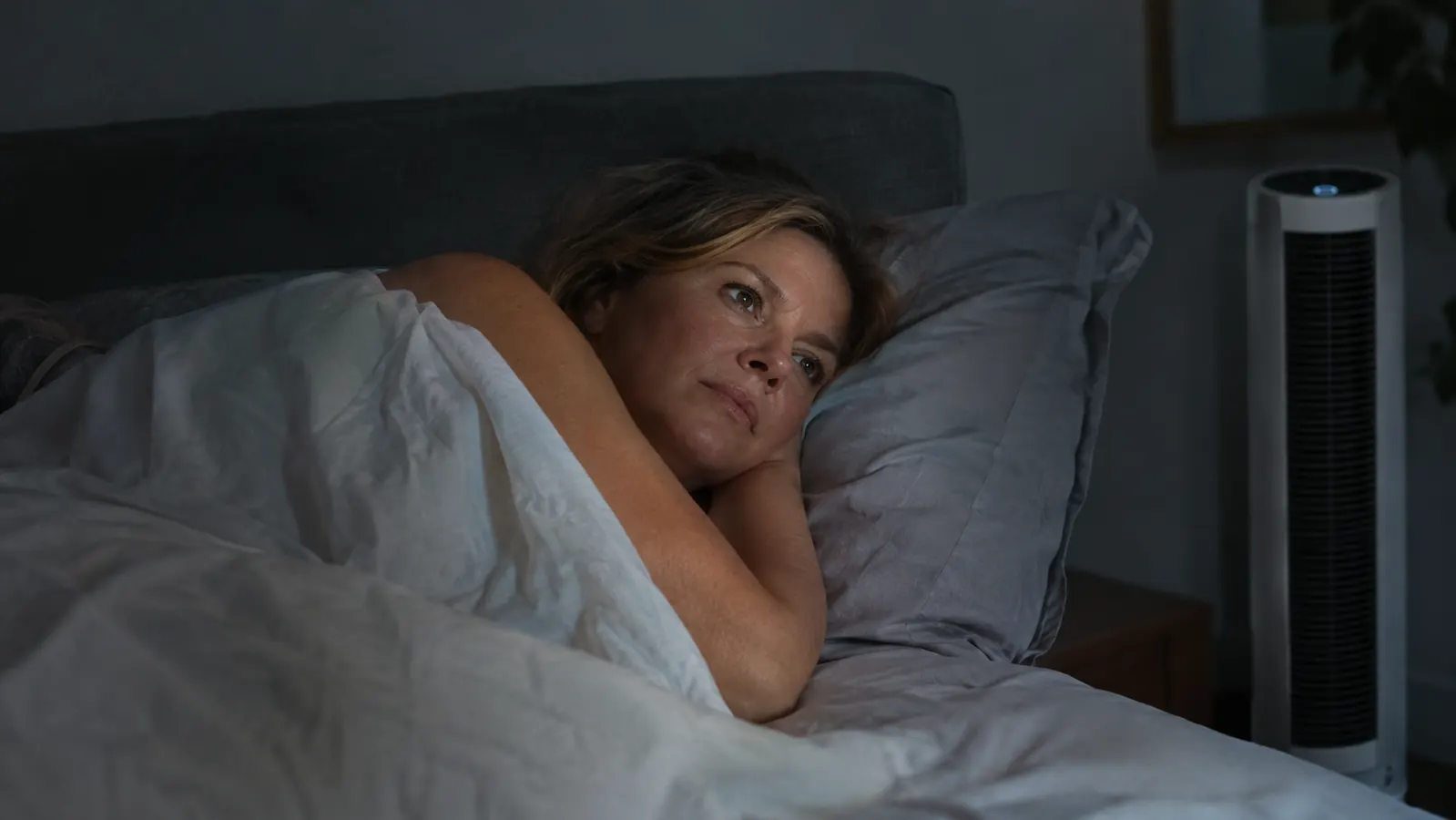
A topper changes how the mattress feels, but it does not change the air in the room. If your bedroom is stuffy, you will still wake up hot. I put a Dreo tower fan on my side of the bed, aimed at my torso, and it made a bigger difference than I expected. It has 8 speeds and a remote, so I can adjust it without sitting up. I keep it on a low or medium speed at night, just enough to keep the air moving over my skin. It has run every night since June and it is still going strong.
The fan does not blow directly on my face, which would dry out my eyes and nose. It sits on the floor or on a low nightstand and points at my chest and arms. That gentle airflow is what keeps me from waking up with that damp, overheated feeling. The fan does not bother Dennis, but it stays on my side because I am the one who runs hot. If you share a bed with someone who runs cold, a fan aimed at just your side is the compromise that works.
If you do not like fans, a cooling pillow can help too. I use a QUTOOL cooling pillow with shredded memory foam, and it stays noticeably cooler than my old pillow. It also has a zipper so I can adjust the fill. Between the topper, the breathable sheets, and the pillow, my whole sleep setup is cooler from head to toe. On the nights when I wake up warm anyway, I point the fan at my neck for a few minutes and that usually does the trick.
Step 5: Dress for the Night, Not the Season
What you wear to bed matters more than you think. I used to sleep in old cotton t-shirts, and I would wake up soaked. I switched to a Joyaria cooling pajama set made from bamboo viscose, and it changed how often I wake up hot. The set is long sleeve with a button front top and pants, which sounds too warm, but the fabric breathes so well that it actually keeps me more comfortable than a thin t-shirt that traps sweat against my skin.
I own one set in navy and I wash it on a gentle cycle. It has held up well for about four months. The key is to avoid synthetic sleepwear like polyester or nylon, which do not absorb moisture. Bamboo viscose, cotton, or linen are all better choices. If you are a woman dealing with night sweats, a breathable pajama layer will not stop a hot flash, but it is one less thing working against you.
And keep a spare set of pajamas and a spare pillowcase on your nightstand. On a bad night, changing into a dry set and flipping the pillow takes two minutes and can save the rest of your sleep. I learned this the hard way after too many nights of lying in damp clothes waiting to cool off. Now I fold the spare set at the foot of the bed, under the blanket, so it is close but out of sight. It sounds like a small thing, but at 3 a.m. it feels like the kindest thing you can do for yourself.
What Else Helps
Beyond the topper, the sheets, the fan, and the pajamas, a few small room changes add up. I keep the thermostat around 68 at night, which is cold for Dennis but right for me. I close the curtains on the west-facing window during the afternoon so the bedroom does not soak up heat before bedtime. I also run the ceiling fan on low for about 20 minutes before I get into bed, just to clear out the warm air that collects near the ceiling. None of these are dramatic, but together they make the bedroom a place where I can actually fall asleep and stay asleep.
One more thing: give the topper a full week before you judge it. The first night, I was not sure I noticed a difference. By the third night, I stopped waking up with a damp back. By the end of the first week, I stopped thinking about the topper entirely, which is exactly what you want from a sleep product. It will not stop your night sweats, and I am not going to pretend it will. What it does is take one variable off the table, the heat of the mattress itself, and that is enough.
One thing I stopped doing: piling on extra blankets 'just in case.' I used to keep a quilt folded at the foot of the bed, and on warm nights it ended up on the floor anyway. Now my side of the bed has the sheets, the light cotton blanket, and nothing else. It is easier to add a layer if I get cold than to peel off three layers in the dark at 3 a.m.
By the third night, I stopped waking up with a damp back. By the end of the first week, I stopped thinking about the topper entirely, which is exactly what you want from a sleep product.
A Cooler Night Starts With the Layer Under Your Sheet
The Linenspa 2 inch gel memory foam topper is the simplest change I made, and it is the one I would make first. It adds a cool, pressure-relieving layer without the cost or hassle of a new mattress.
Amazon Check Today's Price on Amazon →